Lake Geneva Short-Term Rental Rules Buyer Guide
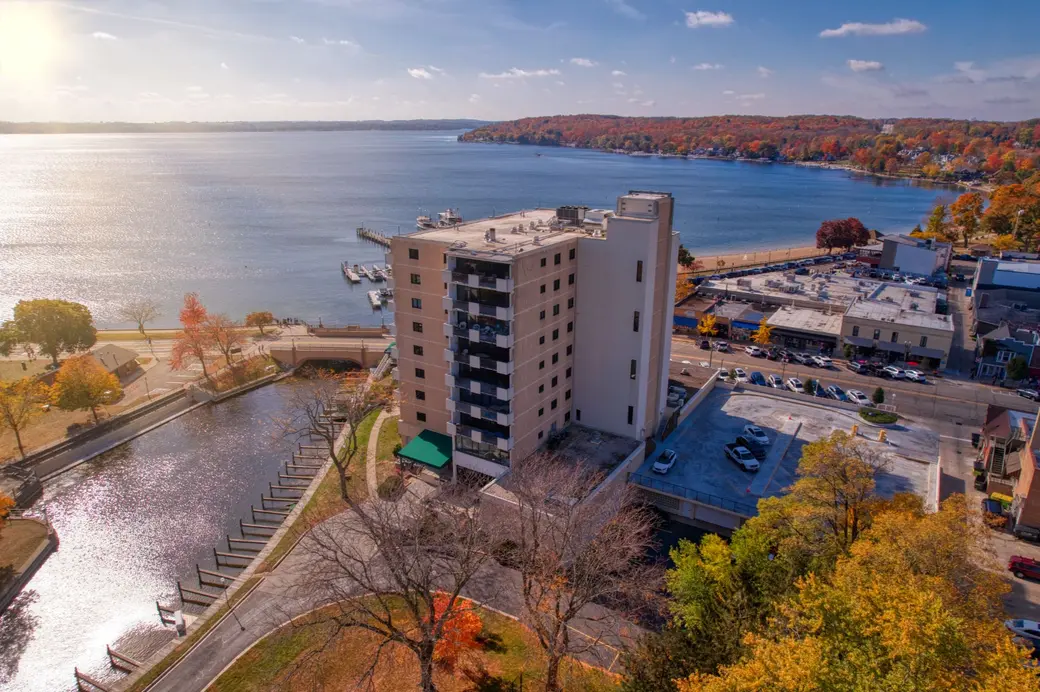
Can You Airbnb a Home Near Geneva Lake?
Considering a Lake Geneva vacation rental property? Before you buy, learn what to research about short-term rental rules, zoning, permits, HOA limits, licensing, parking, occupancy, taxes, insurance, and local restrictions.
Lake Geneva Short-Term Rental Rules Buyer Guide
Can I use a Lake Geneva home as a short-term rental?
Yes, some Lake Geneva homes can be used as short-term rentals, but buyers must verify the exact municipality, zoning, license requirements, occupancy limits, parking rules, taxes, insurance, and HOA restrictions first. A Lake Geneva mailing address does not automatically mean the property follows City of Lake Geneva rules. The 53147 Zip code includes the City of Lake Geneva, Town of Linn, and the Town of Geneva. They all have different rules.
Lake Geneva has always been a place where Chicago families come for weekends, summer stays, weddings, boating, golf, festivals, family reunions, and memory-making. So it is no surprise that many second-home buyers ask the same practical question:
“Can we rent the home when we are not using it?”
The answer is sometimes yes, but this is one of those Lake Geneva real estate topics where the details matter.
A home inside the City of Lake Geneva may have different short-term rental rules than a home in the Town of Geneva, Town of Linn, Village of Williams Bay, Village of Fontana, Town of Delavan. A condo near the lake may be governed by a private association. A golf community may have its own rental rules. A lake-access neighborhood may have covenants that matter just as much as the local ordinance.
For buyers, this is not a quick yes or no issue.
It is a due diligence issue.
This guide is designed to help you understand what to research before buying a Lake Geneva vacation rental property, Airbnb property, lake-area investment home, or second home you may want to rent part-time.
For local lifestyle research, weekend demand, events, dining, lake activities, and community context, use as a companion guide while evaluating the real estate side of the decision.
Important note: This is general buyer education, not legal, tax, zoning, or investment advice. Short-term rental rules can change. Always confirm directly with the municipality, association, lender, insurance provider, tax professional, and attorney before relying on a property for rental income.
What counts as a short-term rental near Lake Geneva?
A short-term rental near Lake Geneva generally refers to a residential home, cottage, cabin, condo, or lodging place rented to guests for a short stay. These properties are treated differently from hotels, motels, traditional inns, boarding houses, and regulated bed-and-breakfast operations.
A short-term rental is usually a private residential property offered to guests for temporary lodging. In the Lake Geneva area, this often means a lake cottage, downtown home, condo, golf-area property, or second home listed on platforms such as Airbnb or Vrbo.
But buyers should not assume every property can legally be used this way.
Before you rely on short-term rental income, confirm:
-
The exact municipality
-
The zoning district
-
Whether short-term rental use is allowed
-
Whether a local license is required
-
Whether a State of Wisconsin Tourist Rooming House License is required
-
Whether the home can meet occupancy rules
-
Whether parking requirements can be satisfied
-
Whether the property is on public sewer or private septic
-
Whether a well inspection or water test is required
-
Whether an HOA, condo association, subdivision covenant, or deed restriction limits rentals
-
Whether the property has past complaints, violations, or enforcement issues
This is where a local buyer strategy matters. Kim and Joel Reyenga help buyers look beyond the pretty photos and ask the practical questions that can affect use, income, carrying costs, neighborhood fit, and resale value. Kim and Joel Reyenga at eXp Realty are Short Term Rental Experts in the Lake Geneva marketplace.
For lifestyle context around what brings visitors to the area, review the and the local guides at .
Are short-term rentals legal in Wisconsin?
Wisconsin law limits how local governments can restrict residential rentals of seven consecutive days or longer. Local governments may regulate short-term rentals through licensing, inspections, nuisance rules, parking standards, room tax, and safety requirements, but private associations may have separate restrictions.
Wisconsin’s right-to-rent framework is a major reason short-term rental rules are structured the way they are across the Lake Geneva region.
In general, Wisconsin law limits a local government’s ability to completely ban rentals of seven consecutive days or longer. However, that does not mean a buyer can operate a property however they want.
Cities, villages, towns, and counties may still regulate short-term rentals through:
-
Licensing
-
Registration
-
Inspections
-
Occupancy limits
-
Parking rules
-
Noise and nuisance standards
-
Trash requirements
-
Room tax permits
-
Local contact or designated operator rules
-
Annual renewal requirements
-
Penalties for non-compliance
The key buyer takeaway is simple:
A property may have a right to be rented under state law, but the property still has to satisfy local rules.
That is why buyers should verify both state and local requirements before making rental income assumptions.
What are the City of Lake Geneva short-term rental rules buyers should know?
In the City of Lake Geneva, buyers should research the annual City short-term rental license, state lodging license, room tax permit, business license, inspection, insurance, occupancy limits, designated operator requirement, parking rules, advertising rules, rental season limits, and penalties before relying on rental income.
Operating a short-term rental in the City of Lake Geneva is not as simple as handing over the keys.
A buyer should research whether the property requires:
-
Annual City short-term rental license
-
State of Wisconsin Tourist Rooming House License
-
City room tax permit
-
City general business license
-
Proof of insurance
-
Building or safety inspection
-
Floor plan
-
Site plan
-
Parking plan
-
Designated operator information
-
Occupancy approval
-
Payment of required fees
The City of Lake Geneva also points owners and residents to its local short-term rental ordinance, commonly referenced as Ordinance 98-206(y). Because ordinances and forms can change, buyers should verify the latest version directly with the City before writing an offer or relying on any income projection.
Before buying, ask:
-
Does the home already operate as a licensed short-term rental?
-
Is the license current?
-
Is the license transferable, or does the buyer need to apply after closing?
-
Has the property passed inspection?
-
Does the property meet current parking requirements?
-
Does the bedroom layout support the occupancy being advertised?
-
Are there open violations or complaints?
-
Has room tax been collected and remitted properly?
-
Is there a local manager or designated operator?
-
Would any improvements be required before the property could be rented?
A strong buyer strategy may include municipal verification during the inspection period or as part of the buyer’s offer contingency structure.
What is the 180-day rule in Lake Geneva?
Lake Geneva-area short-term rental rules include a 180-day rental operation limit within a 365-day period. In some jurisdictions, those days may need to be consecutive. Buyers should verify the exact rule for the property’s municipality before calculating rental income.
The 180-day rule is one of the most important short-term rental concepts for Lake Geneva buyers.
Many local ordinances in the area limit short-term rental operation to 180 days within a 365-day period. In some places, those days may need to be consecutive, and the owner may select the rental season.
This matters for investment math.
A buyer should not calculate revenue as though the home can be rented every weekend of the year unless the exact jurisdiction clearly allows that use.
In the Lake Geneva market, the strongest rental demand often centers around:
-
Late spring
-
Summer
-
Early fall
-
Holiday weekends
-
Wedding weekends
-
Lake season
-
Golf season
-
Winterfest
-
Venetian Festival
-
Country Thunder
-
Farmers markets
-
Live music weekends
-
Food and wine events
-
Family activity weekends
That is why the is useful for understanding seasonal demand. The events calendar helps buyers see why certain weekends may be more valuable than others.
For many Chicago families, the 180-day structure may still work well. Owners may use the home personally part of the year and rent it during peak visitor windows.
But buyers should understand this clearly:
Legal rental potential and unlimited rental operation are not the same thing.
Kim and Joel have developed a Lake Geneva Short Term Rental Pricing Guide.
For your copy email joel.reyenga@exprealty.com and ask for the STR Price Guide, and we will send it out.
What about occupancy, parking, noise, and management?
Lake Geneva short-term rentals may be subject to occupancy, parking, management, advertising, noise, trash, and neighborhood impact rules. Buyers should confirm sleeping-room capacity, parking count, operator requirements, septic or sewer capacity, safety rules, and guest standards before relying on projected rental income.
Occupancy is one of the biggest due diligence questions for short-term rental buyers.
A home may have four bedrooms, but that does not automatically mean it can legally sleep twelve guests. Legal occupancy may depend on:
-
Bedroom size
-
Room dimensions
-
Ceiling height
-
Cubic air space
-
State lodging standards
-
Septic capacity
-
Sewer connection
-
Local licensing approval
-
Fire and safety standards
-
The occupancy number listed on the license
Parking is another major issue.
Many short-term rental complaints begin with guest parking. A buyer should confirm:
-
How many off-street spaces are required
-
Whether street parking is allowed
-
Whether parking must be paved
-
Whether gravel, grass, or lawn parking is prohibited
-
Whether the driveway layout works for guest vehicles
-
Whether boat trailers, extra vehicles, or event traffic create issues
-
Whether the property has enough space for peak occupancy
Management also matters. Many local ordinances require a designated operator or responsible party who can respond to complaints, emergencies, guest issues, and city inquiries. Some rules require that person to be within a certain distance from the property and available 24/7 during rental periods.
Translation for buyers:
A beautiful lake-area home may look like a dream rental, but if it cannot meet parking, occupancy, septic, safety, HOA, or operator requirements, its rental value may be very different than expected.
Do HOA and condo rules matter?
Yes. HOA, condominium, subdivision, and deed restrictions can matter as much as city or state rules. Wisconsin’s right-to-rent law applies to local governments, not private associations. A condo or HOA may have its own rental restrictions, minimum lease terms, approval rules, caps, or rental bans.
This is one of the biggest buyer traps in the vacation-home market.
A property may be located in a municipality where short-term rentals are allowed, but the HOA or condominium association may still restrict them.
Before buying a Lake Geneva vacation rental property, review:
-
Condominium declarations
-
Bylaws
-
Rules and regulations
-
HOA covenants
-
Subdivision restrictions
-
Rental caps
-
Minimum lease terms
-
Guest registration rules
-
Pet rules
-
Amenity rules
-
Parking rules
-
Lake access rules
-
Boat slip rules
-
Any pending amendments or board discussions
This is especially important around lake communities, resort communities, golf communities, and condominium associations where lifestyle, privacy, parking, and amenity control are major concerns.
A property may be perfect for your family but wrong for your rental plan. That is why buyers need both lifestyle guidance and document review.
For neighborhood research, explore the community pages on , including guides for Lake Geneva, Williams Bay, Fontana, Delavan, Geneva National, Abbey Springs, and surrounding communities.
How do Walworth County rules differ from City of Lake Geneva rules?
Walworth County rules generally apply to the townships, not cities or villages that have their own ordinances. A Lake Geneva mailing address does not always mean the property is inside the City of Lake Geneva. Buyers must identify the exact governing jurisdiction first.
This is where buyers can get sideways quickly.
A property may say “Lake Geneva” in the mailing address, but legally it may be in:
-
City of Lake Geneva
-
Town of Geneva
-
Town of Linn
-
Rules can differ by municipality.
Walworth County rules generally apply to township areas of the County. Cities and villages often have their own separate ordinances. Some towns may also have local requirements in addition to County and state requirements.
That makes jurisdiction one of the first questions Kim and Joel recommend buyers confirm.
Do not ask only:
“Can this Lake Geneva home be an Airbnb?”
Ask instead:
“Which municipality governs this property, what ordinance applies, and can this specific property satisfy the rules?”
That one question can protect a buyer from making the wrong investment assumption.
What should buyers research before writing an offer?
Before writing an offer on a Lake Geneva short-term rental property, buyers should verify jurisdiction, zoning, local licenses, state license requirements, room tax, parking, occupancy, septic or sewer capacity, HOA restrictions, insurance coverage, financing terms, property management, complaint history, and documented rental income.
Here is the buyer due diligence checklist.
1. Confirm the exact jurisdiction
Do not rely only on the mailing address. Confirm whether the property is in the City of Lake Geneva, Town of Geneva, Town of Linn, Village of Williams Bay, Village of Fontana, City of Delavan, Town of Delavan. City of Elkhorn, Town of LaGrange.
2. Verify zoning and permitted use
Ask the municipality whether short-term rental use is permitted for that parcel and whether any special approvals are required.
3. Confirm all required licenses
Depending on location, this may include:
-
State of Wisconsin Tourist Rooming House License
-
Local short-term rental license
-
Room tax permit
-
Business license
-
Inspection approval
-
Fire or safety inspection
-
Well or septic review
-
Local contact or designated operator registration
4. Review HOA, condo, and deed restrictions
Do not skip this step. Private restrictions can be stricter than local rules. Condo Associations and HOA's can have restrictions on rentals.
5. Check occupancy assumptions
Do not assume that bedroom count equals guest count. Occupancy may depend on room size, ceiling height, cubic air space, septic design, state license limits, and local ordinance standards.
6. Confirm parking
Many rental complaints start with parking. Make sure the property can satisfy off-street parking requirements without relying on grass, gravel, street parking, or neighbor tolerance.
7. Review tax obligations
Short-term rental owners may need to collect and remit room tax, state sales tax, and other applicable taxes. Buyers should speak with a tax professional before relying on net income estimates.
8. Review insurance
A standard homeowners policy may not cover short-term rental activity. Buyers should confirm coverage before closing.
9. Review lender rules
Some loan programs may restrict rental use. If the buyer is using second-home financing, investment financing, DSCR financing, or conventional financing, the lender should know the intended use.
10. Verify seller income
Ask for documented rental history, booking statements, tax filings, expense records, management agreements, cleaning costs, maintenance costs, utility costs, platform fees, occupancy rates, and seasonality.
11. Ask about complaints or violations
Ask whether the property has had complaints, citations, license issues, room tax problems, occupancy violations, parking violations, noise complaints, or management concerns.
12. Confirm future rule risk
A property that works as a short-term rental today may face future rule changes. Buyers should build conservative assumptions and avoid overpaying based only on best-case rental projections.
Is a Lake Geneva short-term rental a good investment?
A Lake Geneva short-term rental can be a strong lifestyle investment when the home, location, rules, management, and numbers align. It is not automatically a good investment just because Lake Geneva is popular. Buyers should evaluate legal use, seasonality, expenses, financing, taxes, and resale demand.
Lake Geneva has powerful demand drivers:
-
Geneva Lake
-
Boating
-
The Shore Path
-
Downtown dining
-
Weddings
-
Golf
-
Festivals
-
Conferences
-
Family travel
-
Summer homes
-
Year-round events
-
Chicago weekend visitors
That is why short-term rentals are part of the local conversation. They provide flexible lodging for visitors, especially families and groups who want a more home-like stay.
But they also create real concerns around:
-
Parking
-
Noise
-
Guest behavior
-
Neighborhood character
-
Housing availability
-
Enforcement
-
Safety
-
Local quality of life
That is the exact balance buyers need to understand.
The strongest vacation rental candidates often have:
-
A desirable location
-
Clear legal rental path
-
Strong parking
-
Simple guest access
-
Good bedroom-to-bathroom ratio
-
Manageable maintenance
-
Durable finishes
-
Noise-buffering lot layout
-
Proximity to dining, lake access, golf, events, or downtown
-
Professional management options
-
Clear HOA rules or no restrictive association issues
-
Conservative income projections
But some properties are better as personal second homes than income-producing rentals. And that is perfectly fine.
For many Chicago families, the primary return is lifestyle: summer weekends, holiday traditions, lake days, and time together.
The rental income may help offset carrying costs, but the home still needs to make sense even if the rental rules tighten, income varies, or expenses rise.
For a lifestyle snapshot of what makes the area attractive to guests and owners, explore and the .
What are the biggest buyer mistakes with Airbnb properties near Lake Geneva?
The biggest mistakes are assuming all Lake Geneva addresses follow the same rules, trusting online rental estimates without verifying legality, ignoring HOA restrictions, overlooking septic and parking limits, assuming a seller’s license transfers, and failing to confirm insurance, room tax, permits, and management requirements before closing.
Here are the mistakes Kim and Joel help buyers avoid.
Mistake 1: Confusing mailing address with municipality
A Lake Geneva mailing address does not always mean City of Lake Geneva rules apply.
Mistake 2: Assuming an Airbnb listing proves legal use
An online listing does not prove the property is properly licensed.
Mistake 3: Ignoring HOA rules
Associations may restrict or prohibit rentals even when local government rules allow them.
Mistake 4: Overestimating occupancy
A “sleeps 14” marketing line is not the same as legal occupancy.
Mistake 5: Forgetting parking
Parking can make or break guest experience, neighbor acceptance, and ordinance compliance.
Mistake 6: Treating gross revenue as profit
Cleaning, utilities, platform fees, management, maintenance, insurance, taxes, furnishings, repairs, permits, inspections, and vacancy matter.
Mistake 7: Assuming rules will stay the same
Short-term rental regulation is an evolving topic across Wisconsin and resort markets nationwide.
Mistake 8: Buying for income only
A Lake Geneva second home should still make sense as a lifestyle purchase, a family retreat, and a long-term real estate hold. Rental income can help, but it should not be the only reason the property works.
How does LakeGenevaWeekend.com help buyers understand rental demand?
LakeGenevaWeekend.com helps buyers understand the lifestyle side of Lake Geneva ownership. Events, festivals, dining, outdoor activities, boating, community guides, and weekend travel patterns all influence why guests visit and why some properties may have stronger seasonal rental appeal than others.
A short-term rental is not just a house. It is part of a visitor experience.
Guests come to the Lake Geneva region for boating, restaurants, live music, golf, beaches, festivals, farmers markets, holiday events, the Shore Path, family activities, and weekend escapes from Chicago.
That is why buyers should study both the property and the lifestyle demand around it.
Helpful LakeGenevaWeekend.com links:
These links help buyers understand why location, walkability, event proximity, lake access, dining, family activities, and seasonal timing matter.
The real estate decision happens on YourWiscoHome.com
The lifestyle research happens beautifully on LakeGenevaWeekend.com.
Final buyer takeaway
A Lake Geneva vacation rental property can be a wonderful second-home strategy, but buyers should treat short-term rental use as a regulated property use, not a casual side benefit. Confirm the municipality, rules, licenses, HOA restrictions, taxes, insurance, and operating assumptions before making the purchase decision.
Lake Geneva short-term rentals sit at the intersection of lifestyle, tourism, neighborhood character, local government, and real estate investment.
That is why the best buyers do their homework early.
Before you write an offer:
-
Ask the questions
-
Confirm the jurisdiction
-
Review the rules
-
Talk to the municipality
-
Read the HOA documents
-
Verify the license path
-
Run conservative numbers
-
Make sure the home works for your family first
Kim and Joel Reyenga of eXp Realty help Chicago families and Lake Geneva buyers evaluate second homes, lake-area properties, vacation homes, and real estate opportunities throughout the Geneva Lake region.
Thinking about a Lake Geneva vacation home or short-term rental property? Kim & Joel are Lake Geneva Short Term Rental experts. Search Lake Geneva homes at YourWiscoHome.com, explore local lifestyle and events at .
FAQ Section
Can I Airbnb my Lake Geneva home?
Possibly, but only if the property is in a jurisdiction that allows the use and the home meets all local, state, licensing, parking, occupancy, tax, insurance, and association requirements. In the City of Lake Geneva, STRs require local review and licensing.
Does a Lake Geneva short-term rental license transfer when I buy the property?
Buyers should not assume a seller’s short-term rental license transfers. Confirm directly with the local municipality before writing an offer or relying on continued rental use after closing.
Can an HOA or condo association ban short-term rentals?
Yes. Wisconsin’s right-to-rent law applies to local governments, not homeowner associations or condominium associations. Buyers should review all association documents before assuming short-term rentals are allowed.
How many days can I rent a Lake Geneva short-term rental?
Many Lake Geneva-area rules include a 180-day limit within a 365-day period, and some require those days to be consecutive. Buyers should confirm the exact rule with the governing municipality.
Do Walworth County rules apply to all Lake Geneva-area homes?
No. Walworth County rules generally apply to unincorporated areas of the County. Cities and villages may have their own ordinances. Buyers should confirm the exact municipality before relying on any short-term rental plan.
Where can I research Lake Geneva events and visitor demand?
Use and the
Categories
- All Blogs (210)
- Burlington Buyers Guide (1)
- Burlington Relocation Guide (3)
- Burlington Sellers Guide (1)
- Delavan Buyers Guide (1)
- Delavan Lake Sellers Guide (1)
- Delavan Real Estate Market Update (1)
- Delavan Relocation Guide (1)
- Delavan Sellers Guide (1)
- East Troy Buyers Guide (1)
- East Troy Relocation Guide (1)
- Elkhorn Buyers Guide (1)
- Elkhorn Relocation Guide (1)
- Elkhorn Sellers Guide (1)
- Fontana (13)
- Fontana Buyers Guide (1)
- Fontana Sellers Guide (1)
- Fontana WI Relocation Guide (2)
- Geneva National (5)
- Lake Geneva (29)
- Lake Geneva & The Southern Lakes Market Report (1)
- Lake Geneva Area Homes (10)
- Lake Geneva Buyers Guide (8)
- Lake Geneva Real Estate Market Update (6)
- Lake Geneva Sellers Guides (44)
- Lauderdale Lakes (2)
- Twin Lakes Buyers Guide (1)
- Twin Lakes Relocation Guide (3)
- Twin Lakes Sellers Guide (1)
- Walworth Buyers Guide (1)
- Walworth County Market Updates (5)
- Walworth County Seller Guides (6)
- Walworth Relocation Guide (3)
- Walworth Sellers Guide (1)
- Whats Happening at the Lake (30)
- Whitewater Buyers Guide (1)
- Whitewater Relocation Guide (3)
- Whitewater Sellers Guide (1)
- Williams Bay (9)
- Williams Bay Real Estate Market Update (1)
- Williams Bay Relocation Guide (3)
- Williams Bay Sellers Guide (3)
Recent Posts