How Do Property Taxes Affect the Sale of a Wisconsin Second Home?
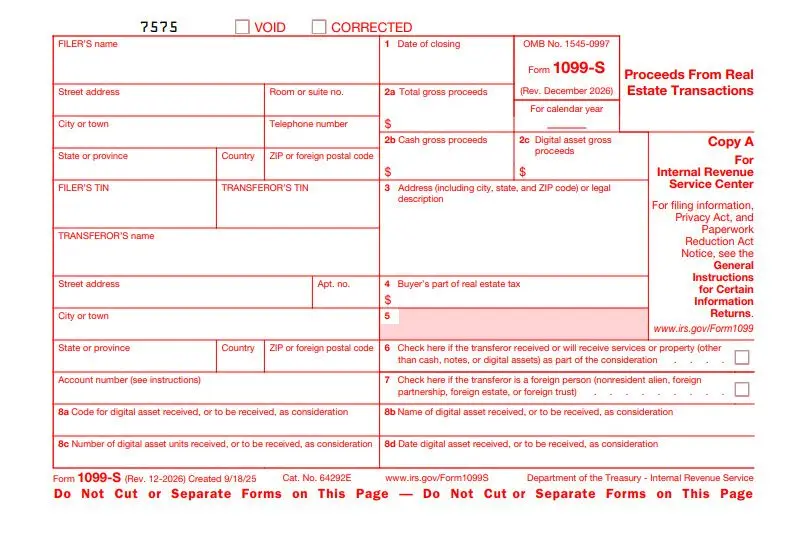
Quick answer: Property taxes touch a Wisconsin second-home sale in 4 places: the proration you owe at closing, the credits on your tax bill (one of which your second home never qualified for), the assessed value a buyer will compare against your list price, and the gain you report afterward without the exclusion a primary residence would give you. The first 3 are mechanical. The fourth needs a CPA.
Here's what each one does to your sale, and the one that quietly creates a problem for out-of-state owners.
The credit your second home never qualified for
Start here, because this is the item most likely to be sitting on your tax bill incorrectly.
Wisconsin's reduces the property tax bill for qualifying owners. To qualify you must be a Wisconsin resident, own the dwelling, and use it as your primary residence as of January 1 of the year the taxes are levied. A property owner may claim only one primary residence, and the credit cannot be claimed on rental units, vacant land, garages, or any property that is not the owner's primary residence. A non-Wisconsin resident cannot claim it at all.
A vacation home on Geneva Lake owned by a family in Winnetka does not qualify. Neither does a Delavan Lake cottage owned by someone whose primary residence is in Milwaukee.
Here's the part that catches people. The credit stays attached to the property until somebody removes it. If you bought from an owner who did live there full time and did qualify, the credit can carry forward onto bills that are now yours. You may have been receiving something you were never entitled to, without doing anything wrong.
Wisconsin audits these claims. An unqualified credit gets paid back with interest and penalties, and if it goes unpaid it can be placed on the next tax bill as a special charge. State law also puts the notification duty on the owner: you are expected to tell the county treasurer within 30 days once a property stops being your primary residence.
What to do before you list. Pull your last tax bill and look at the Lottery and Gaming Credit line. If there's a dollar amount on it and the property has been a second home, contact the Walworth County treasurer and file a Lottery and Gaming Credit Removal Request. Sorting it out yourself is a form and a phone call. Having a buyer's attorney find it during the title search is a different conversation entirely, at the worst possible moment.
The credit you do get
The contrast matters, so you know what you're looking at on the bill.
The works differently. Every taxable parcel containing a real property improvement qualifies, whether or not the owner lives there. It applies automatically with no application, and it sits directly above the Lottery and Gaming Credit line on the bill.
So a second home does get the First Dollar Credit. It does not get the Lottery and Gaming Credit. Two adjacent lines, two completely different rules, and the one that requires an application is the one that creates exposure.
What a buyer reads into your assessed value
Your assessment is a municipal valuation for tax purposes. Buyers routinely treat it as an appraisal, and it is not one.
Assessments in the City of Lake Geneva are conducted annually, and the can tell you what your parcel currently carries. Whether that number sits above or below what your home would actually sell for depends on when the last revaluation happened and how fast the market moved afterward.
Both directions cause problems in a negotiation:
Assessment well below your list price. A buyer points at it and argues you're overpriced. The answer is a real comp analysis, because comparable sales are what set market value and an assessment is not a comparable sale. See .
Assessment above your list price. Now the buyer is looking at a future tax bill that feels heavy relative to what they're paying. Have the actual bill and the assessment history ready rather than letting them guess.
Either way, know both numbers before you list and be able to explain the gap. Start with .
The tax bill itself is a selling document
On lake property this is a bigger factor than sellers expect, because the spread across the area is wide.
A lakefront parcel on Geneva Lake carries a materially different annual bill than an inland home a few miles away, or a comparable place on Delavan Lake, the Lauderdale chain, or Whitewater Lake. A buyer comparing waterfront options across the area is comparing carrying costs, not just prices, and the tax line is a large part of that.
Have the numbers ready. , and a buyer will find it whether or not you hand it to them. Presenting the actual figure with the assessment history reads as confidence. Deflecting the question reads as something to hide.
If your property carries special assessments, lake district charges, or association items on top of the tax bill, disclose those in the same breath. They belong in your document package: .
Proration, briefly
You cover property taxes for your share of the year up to closing, using the formula stated in the accepted offer. A later closing date means a larger proration, and on a property with a five-figure annual bill the timing moves your net noticeably.
That mechanic is covered fully in , so it isn't repeated here. Worth pairing with your listing timeline, since the season you list in and the date you close on are one decision: .
Gain on a second home works differently
This is where the second-home distinction costs real money, and where we stop being the right people to ask.
A primary residence can qualify for a federal exclusion on gain, subject to ownership and use tests. A second home does not get that treatment. If you've held a Geneva Lake property for 20 years while values climbed, the gain is exposed in a way it would not be on the house you actually live in.
Several things change the calculation:
-
Your basis, which is what you paid plus capital improvements. Twenty years of receipts for a new roof, a pier, a kitchen, or an addition can matter substantially, and the time to find them is before closing rather than in April
-
Any period the property was rented, which brings depreciation into it
-
Whether the property was inherited, which changes basis entirely. See
-
Your state of residence, covered next
We're licensed real estate agents, not tax advisers. Take this to a CPA before you list rather than after you close, because some of the useful moves are only available while you still own the property.
If you live in another state
Wisconsin taxes nonresidents on income from Wisconsin sources, and gain on the sale of Wisconsin real estate is Wisconsin-source income. That's the general rule. How it interacts with your home state's return, and what credits may be available, is a question for a CPA who handles multi-state filing.
Practically, an out-of-state seller should sort 3 things early: the gain question with a tax professional, the Lottery and Gaming Credit line on the tax bill, and how the closing itself gets handled remotely. The logistics are in , and the prep sequence is in .
How Kim and Joel handle the tax side
We pull your assessment and your current tax bill at the start, so the numbers are in the marketing package rather than surfacing as a buyer objection. We flag the Lottery and Gaming Credit line if it looks wrong, because that one is easier to fix in July than during a title search.
Then we build the proration into your net sheet against a realistic closing date, so the figure you're looking at is the figure you'll actually clear. The full cost picture is in , and our full process is in .
What we don't do is give tax advice. We tell you which questions to bring your CPA and when to bring them, which is early.
Frequently asked questions
How do property taxes affect the sale of a Wisconsin second home?
In 4 ways: you owe prorated taxes through the closing date, your tax bill may carry a credit your second home never qualified for, buyers compare your assessed value against your list price, and gain on a second home lacks the exclusion available on a primary residence. The first 3 are mechanical, and the fourth is a CPA question.
Does a second home qualify for the Wisconsin lottery and gaming credit?
No. The credit requires Wisconsin residency and use of the dwelling as your primary residence as of January 1 of the levy year, and only one primary residence may be claimed. A non-Wisconsin resident cannot claim it at all. Second homes, vacation homes, and rental units do not qualify.
What happens if I have been receiving a lottery credit I was not entitled to?
The credit stays attached to a property until it is removed, so it can carry over from a prior owner who did qualify. Wisconsin audits these claims, and an unqualified credit is repaid with interest and penalties, which can be added to the next tax bill as a special charge if unpaid. File a removal request with the county treasurer to correct it.
Is my assessed value the same as market value?
No. An assessment is a municipal valuation for tax purposes, and it can sit above or below what a home would sell for depending on when the last revaluation happened. Buyers often treat it as an appraisal, so know both your assessment and your comp-based value before you list, and be ready to explain any gap.
Do I pay capital gains tax when I sell a Wisconsin second home?
Gain on a second home does not receive the federal exclusion available on a primary residence, so it is generally exposed. Your basis, capital improvements, any rental use, and how you acquired the property all affect the number. This is a CPA question, and it is worth asking before you list rather than after you close.
Do I owe Wisconsin income tax if I live in another state?
Wisconsin taxes nonresidents on income from Wisconsin sources, and gain on the sale of Wisconsin real estate is Wisconsin-source income. How that interacts with your home state's return and what credits apply depends on your situation, so bring it to a CPA who handles multi-state filing.
Get the tax questions sorted before you list
Selling a second home in Lake Geneva, Williams Bay, Fontana, Geneva National, Delavan, Elkhorn, or anywhere in the Lake Geneva area?
, or call or text (262) 325-9867
Categories
- All Blogs (198)
- Delavan Buyers Guide (1)
- Delavan Lake Sellers Guide (1)
- Delavan Real Estate Market Update (1)
- Delavan Relocation Guide (1)
- Delavan Sellers Guide (1)
- Elkhorn Buyers Guide (1)
- Elkhorn Relocation Guide (1)
- Elkhorn Sellers Guide (1)
- Fontana (13)
- Fontana Buyers Guide (1)
- Fontana Sellers Guide (1)
- Fontana WI Relocation Guide (2)
- Geneva National (5)
- Lake Geneva (29)
- Lake Geneva Area Homes (10)
- Lake Geneva Buyers Guide (8)
- Lake Geneva Real Estate Market Update (6)
- Lake Geneva Sellers Guides (44)
- Lauderdale Lakes (2)
- Walworth Buyers Guide (1)
- Walworth County Market Updates (5)
- Walworth County Seller Guides (6)
- Walworth Relocation Guide (3)
- Walworth Sellers Guide (1)
- Whats Happening at the Lake (30)
- Williams Bay (9)
- Williams Bay Real Estate Market Update (1)
- Williams Bay Relocation Guide (3)
- Williams Bay Sellers Guide (3)
Recent Posts