What Buyers Notice First When Touring Homes Near Geneva Lake
Quick answer: Buyers form most of their opinion in the first 60 seconds, before they've seen a single bedroom. The sequence runs approach, front door, entry sightline, and smell, in that order. On a lake property there's a fifth thing that jumps the line entirely: within seconds of stepping inside, they look for the water. Whether they find it, and what it looks like when they do, shapes everything that follows.
Showings here run 15 to 30 minutes. Here's what fills the first minute of one, and where your preparation time actually pays.
The first 60 seconds, in order
Buyers don't tour a house in the order you'd walk them through it. They react in a fixed sequence, and most of it happens before anyone says anything.
| Seconds | What they take in | What it tells them |
|---|---|---|
| Approach, 0 to 15 | Driveway, landscaping, roofline, gutters, front of the garage | Whether the property has been maintained |
| The door, 15 to 25 | The entry itself, the lock, how it opens | The first thing they physically touch |
| Entry sightline, 25 to 40 | Whatever is visible from the doorway | Layout, light, and ceiling height |
| Smell, immediately and continuously | Air quality, damp, pets, cooking, mustiness | Whether the house has been cared for |
| The view, on a lake property | Where the water is, and whether they can see it | Whether this property delivers what they came for |
Everything after that first minute is either confirming a good impression or looking for reasons to leave.
That matters more when the market moves quickly. Roughly 60% of sold and pending listings in our July pull went under contract within 30 days, which means the earliest showings carry the most weight. A home that shows badly in week one is often making its real decision in week one.
The lake sightline, which is specific to here
An ordinary house gets toured room by room. A lake property does not.
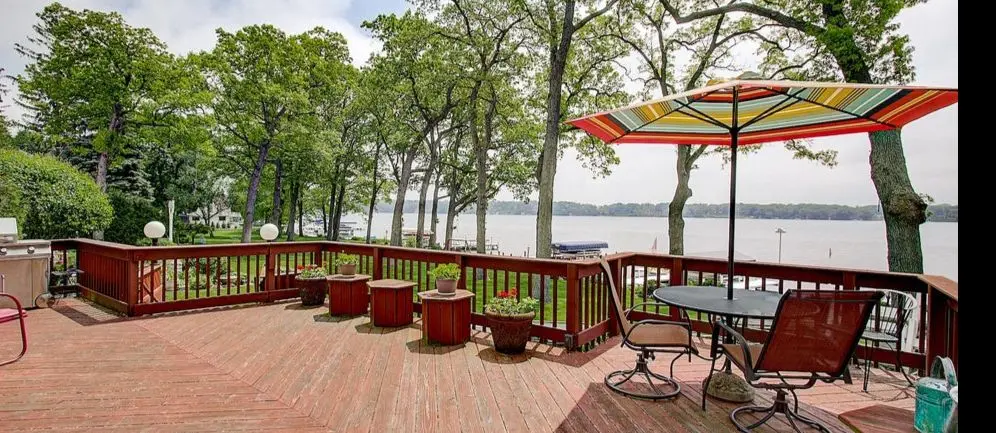
Buyers walk in, and within a few seconds their eyes go looking for water. If it's visible from the entry, the tour has already succeeded before they've seen the kitchen. If they have to walk through 3 rooms to find it, the property has to work harder for the rest of the showing.
You can't move the lake, and you can influence what they see:
-
Open every window covering on the water side before a showing. All of them, all the way
-
Clean those windows to a standard you wouldn't bother with otherwise. Glass on the view side is doing more work than any other surface in the house
-
Clear the sightline from the entry toward the water. Furniture that blocks the path to the view is furniture in the wrong place
-
Set up the outdoor space so the deck or patio reads as a room rather than as storage
For a lake-access property, the equivalent question is where the access is and how you get there. Buyers ask within the first few minutes, and a vague answer costs you. Have the route, the distance, and what conveys ready before the first showing: .
Smell, which is the one photos can't fix
Every other item on this list can be improved by good photography. This one can't, and on a seasonal property it's the most common problem we see.
A second home that's been closed up for months smells like it. Damp basement, still air, a whiff of mildew from a bathroom that hasn't been used since October. The owner doesn't notice it because they arrived an hour ago and their nose adjusted. The buyer notices in the doorway.
Musty reads as water problem to a buyer, whether or not there is one. That's an expensive association to trigger in the first 10 seconds, and buyers price repairs they imagine higher than repairs that actually exist.
What works:
-
Air the house out for a full day before any showing, not for 20 minutes
-
Run a dehumidifier in the lower level, and keep running it
-
Deal with the source rather than covering it. Air freshener over musty reads as musty plus air freshener, which is worse
-
Have somebody who doesn't live there walk through and tell you what they smell. This is the only reliable test available to you
-
Skip strong scents entirely. Candles and plug-ins make buyers wonder what's underneath
Pet odor and cooking smells work the same way, and the same rule applies: neutral beats pleasant, and both beat masked.
If the property is a seasonal home you use in summer, the whole prep sequence runs differently: .
What reads as deferred maintenance
Buyers are constantly estimating what a house will cost them after closing. A handful of small things trigger that math, and each one is cheap to fix relative to what it costs you in a buyer's head.
-
Stained ceilings, which say roof or plumbing whether or not the leak was fixed 5 years ago
-
A sticking or scraping door, which says foundation movement
-
Cracked caulk in a bathroom, which says water intrusion
-
Dirty gutters and downspouts, which say nobody's been keeping up with it
-
A soft or springy deck board, which says the whole deck needs work
-
Burnt-out bulbs, which say nothing individually and everything in aggregate
None of these is expensive. All of them get priced high by a buyer standing in the room guessing. The full punch list is in .
What buyers care about less than sellers expect
Sellers routinely spend on the wrong things before a showing.
Your furniture, unless it's blocking a sightline or making a room feel small. Buyers are looking past it at the room. Presentation still matters, and the reason is space and flow rather than taste: .
Paint color, within reason. A repaint of an unusual color is worth it. A repaint of a perfectly fine beige is not.
A brand-new appliance bought specifically to sell. It rarely returns what it costs, and a clean older appliance in working order does most of the same work.
The finished basement's decor, when the same money would have been better spent on the dehumidifier down there.
The pattern: buyers respond to condition, light, space, and the view. They are much less moved by upgrades than the seller who paid for them.
The showing-day list
Do these every time, not just for the first one:
-
All lights on, including closets and the lower level, regardless of the hour
-
All window coverings open, especially on the water side
-
Counters clear. One or two objects, not a row of appliances
-
Cars out of the driveway and off the frontage
-
Trash out of sight, inside and out
-
Pets gone, along with their bowls, beds, and toys
-
Temperature comfortable. A stuffy house in July or a cold one in February gets toured fast and remembered badly
-
Outdoor spaces set up, with the deck furniture arranged and the grill clean
Then leave. Sellers who stay for showings cost themselves money, because buyers won't talk openly in front of an owner and a buyer who doesn't talk doesn't fall for the house.
Why the first weekend decides more than it should
Attention concentrates hard at launch. The buyers who've been watching this market for months see your listing on day one, and they're the most motivated group you'll ever get in front of.
Which means the property has to be ready before it goes live rather than improved in week 3. By week 3, the people who mattered most have already looked and formed an opinion. Listings that miss that window are the ones that .
The same logic runs through the photography, since the photo set is the showing that happens first: . And none of it substitutes for the number on the listing: .
The remote buyer arrives already informed
A large share of the people touring your home drove 90 minutes from Chicago or flew in from somewhere warmer, and they studied the listing before they came. They arrive with specific questions and a mental image built from your photos.
Two consequences. The property has to match the photos, because a gap between the two reads as a bait and switch even when nothing was misrepresented. And they'll want the practical answers on the spot: who maintains it, what conveys on the water, how it handles winter. See .
How Kim and Joel prepare a home for showings
We walk the property the way a buyer will, starting at the curb, and tell you what we notice in the first minute. Then you get a specific list rather than general advice, ordered by what actually changes a buyer's impression.
We handle the showing-day details, and we tell you plainly when something needs fixing before the first weekend rather than after. Our full process is in .
Frequently asked questions
What do buyers notice first when touring a home?
The approach and the exterior condition, then the front door, then whatever is visible from the entry, and the smell of the house throughout. On a lake property, buyers look for the water within seconds of stepping inside. Most of the impression forms in the first 60 seconds, before they've seen a bedroom.
How long do home showings usually last?
Most run 15 to 30 minutes, and a large share of the decision happens in the first minute. With roughly 60% of area listings going under contract within 30 days, the earliest showings carry the most weight, so the home needs to be ready before it goes live rather than improved later.
How do I get rid of a musty smell before showings?
Deal with the source rather than covering it. Air the house out for a full day, run a dehumidifier in the lower level continuously, and fix any moisture issue. Skip candles and air fresheners, since masked odor reads worse than plain odor. Have someone who doesn't live there walk through and tell you honestly what they smell.
What turns buyers off during a showing?
Odor, especially musty or pet smells. Dark rooms with closed blinds. Clutter that makes spaces feel small. Small signs of deferred maintenance like stained ceilings, sticking doors, or cracked caulk, all of which buyers price higher than the actual repair. And sellers who stay in the house during the showing.
Do buyers care about lake access at a showing?
A great deal, and they ask early. Have the specifics ready: where the access is, how far, whether a pier or slip conveys, and whether the right is deeded or through an association. A vague answer costs you, because it raises a question the buyer then has to resolve on their own.
Should I be home during showings?
No. Buyers won't speak openly in front of an owner, and a buyer who doesn't talk through a house doesn't build enthusiasm for it. Leave, take the pets, and let your agent handle it.
Get a first-minute walkthrough of your home
Preparing to sell in Lake Geneva, Williams Bay, Fontana, Geneva National, Delavan, Elkhorn, or anywhere in the Lake Geneva area?
, or call or text (262) 325-9867
Categories
- All Blogs (204)
- Burlington Buyers Guide (1)
- Burlington Relocation Guide (2)
- Delavan Buyers Guide (1)
- Delavan Lake Sellers Guide (1)
- Delavan Real Estate Market Update (1)
- Delavan Relocation Guide (1)
- Delavan Sellers Guide (1)
- Elkhorn Buyers Guide (1)
- Elkhorn Relocation Guide (1)
- Elkhorn Sellers Guide (1)
- Fontana (13)
- Fontana Buyers Guide (1)
- Fontana Sellers Guide (1)
- Fontana WI Relocation Guide (2)
- Geneva National (5)
- Lake Geneva (29)
- Lake Geneva & The Southern Lakes Market Report (1)
- Lake Geneva Area Homes (10)
- Lake Geneva Buyers Guide (8)
- Lake Geneva Real Estate Market Update (6)
- Lake Geneva Sellers Guides (44)
- Lauderdale Lakes (2)
- Twin Lakes Buyers Guide (1)
- Twin Lakes Relocation Guide (3)
- Twin Lakes Sellers Guide (1)
- Walworth Buyers Guide (1)
- Walworth County Market Updates (5)
- Walworth County Seller Guides (6)
- Walworth Relocation Guide (3)
- Walworth Sellers Guide (1)
- Whats Happening at the Lake (30)
- Williams Bay (9)
- Williams Bay Real Estate Market Update (1)
- Williams Bay Relocation Guide (3)
- Williams Bay Sellers Guide (3)
Recent Posts